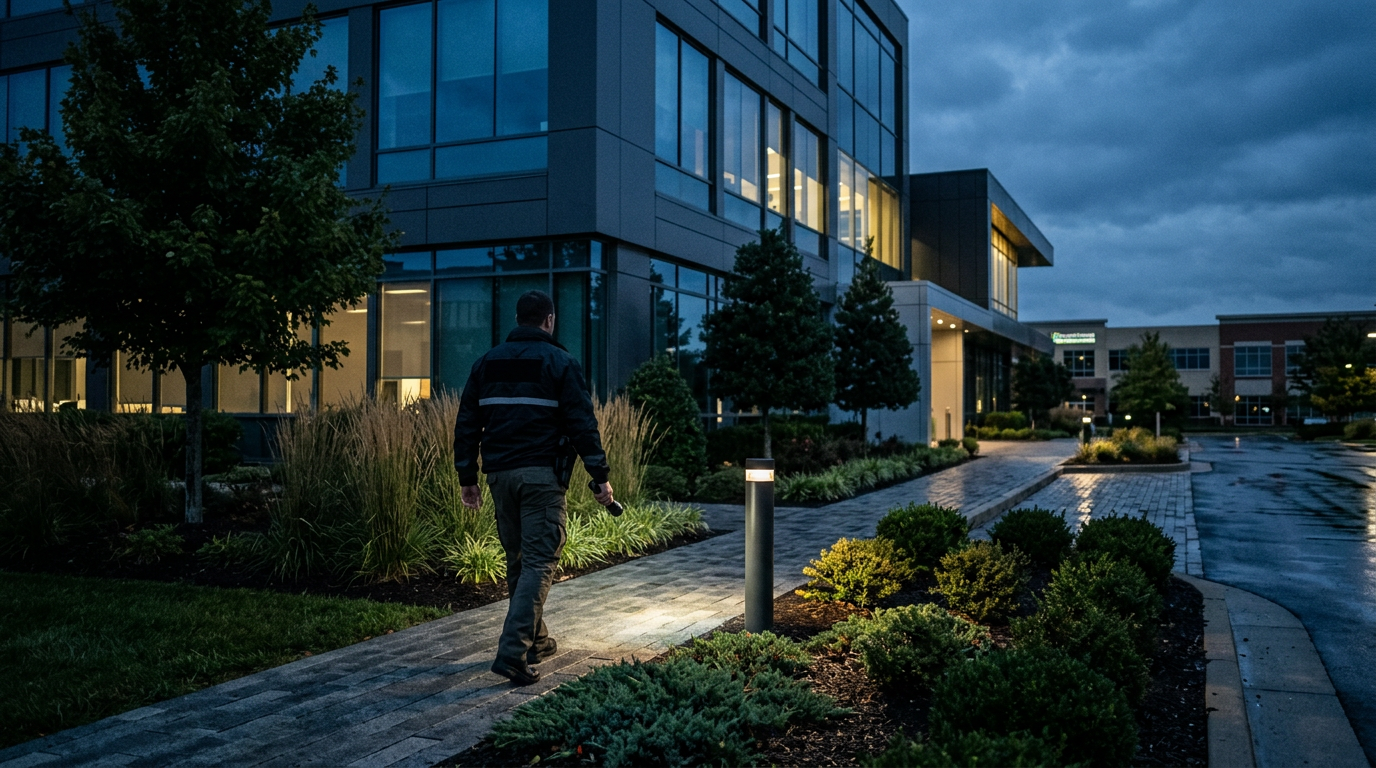
For facility directors and HOA boards in Prince William County, managing premises liability extends beyond functioning fire alarms and clear emergency exits. A critical, yet often overlooked, component of a property’s safety profile is its landscape and lighting design. The legal principle of premises liability holds that property owners have a duty of care to maintain a reasonably safe environment for residents, employees, and invitees. In the event of an incident, such as an assault or robbery on-site, the physical environment itself can become a focal point of litigation.
Courts and insurance adjusters frequently turn to the established principles of Crime Prevention Through Environmental Design (CPTED) to evaluate whether a property owner met that duty of care. CPTED is a multidisciplinary approach to deterring criminal behavior through thoughtful environmental design. It operates on the core idea that the physical environment can influence offender decisions.
Key CPTED Principles for Landscaping and Lighting
Natural Surveillance: This is the most critical principle in this context. The goal is to maximize visibility and keep potential offenders feeling observed. Landscaping should create and maintain clear sightlines, particularly around building entrances, parking lots, and pedestrian walkways.
Standard best practices include keeping shrubs and hedges trimmed to a height of no more than three feet, preventing them from creating hiding spots. Similarly, the canopies of trees should be pruned up to a height of at least seven feet to ensure a clear view at eye level. Lighting should be layered and consistent, designed to eliminate deep shadows and dark spots where an attacker could conceal themselves. The Illuminating Engineering Society (IES) provides specific standards for various environments like parking facilities and walkways.
Natural Access Control: This principle uses landscaping and other environmental features to guide people and vehicles. It’s not about building fortresses but about creating a clear distinction between public and private spaces. For example, low, thorny bushes planted beneath ground-floor windows can discourage access without creating a visual barrier. Well-defined walkways, low ornamental fences, or strategically placed planters can subtly channel foot traffic to monitored entrances and away from sensitive areas.
Territorial Reinforcement: This principle shows that a space is cared for and actively managed. A property with manicured lawns, promptly replaced light bulbs, and well-tended flower beds sends a clear message of ownership and oversight. This signals to potential offenders that a vigilant presence is maintained. Conversely, overgrown vegetation, deferred maintenance, and broken fixtures project an aura of neglect, suggesting a lower risk of detection or intervention.
In a premises liability lawsuit, a plaintiff’s counsel will investigate if CPTED principles were ignored. A poorly lit stairwell where a burned-out bulb was not replaced for weeks, or an overgrown thicket of bushes next to a parking lot that provided concealment for an assailant, can be presented as direct evidence of negligence. Proactively managing landscape and lighting is not merely an aesthetic choice; it is a fundamental aspect of risk management.
Executive Note — EGS Analysis Neglected landscaping isn't just a cosmetic issue; it creates structural vulnerabilities in a property's security posture. A systematic review of CPTED principles is a key component of proactive risk mitigation, significantly reducing the liability footprint before an incident ever occurs.
Educational Sidebar: CPTED Landscape & Lighting Audit Checklist
Use this brief checklist to conduct a preliminary assessment of your property. A "No" answer may indicate an area for further review and remediation.
- Walkways & Parking: Are all pedestrian paths, parking areas, and building entrances illuminated to IES-recommended levels, without significant dark spots?
- Shrubbery: Are all shrubs and hedges near windows, doors, and pathways trimmed to a height below 36 inches?
- Tree Canopies: Are the lower branches of all trees near pedestrian areas pruned to a height of at least 7 feet above the ground?
- Sightlines: From your main entrance and security office, are sightlines to key areas (e.g., mailroom, amenity entrance, parking garage) clear and unobstructed by vegetation or structures?
- Pathways: Are all designated walkways clear and well-defined? Are informal "desire paths" (shortcuts across lawns) addressed with either formal paths or landscape barriers?
- Maintenance Log: Is there a documented schedule for inspecting outdoor lighting and a process for promptly replacing non-functional bulbs and fixtures?
EGS Security Solutions publishes a complimentary threat & vulnerability assessment framework for facility directors in the DMV. Request it here: https://egssecuritysolutions.com/locations/manassas.