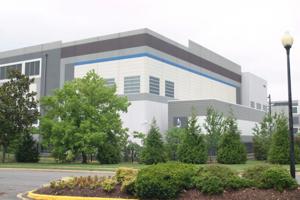
A recent state legislative review has concluded that Virginia’s long-standing data center tax break yields approximately 22 cents in state tax revenue for every dollar saved by technology companies, according to reporting from the Prince William Times.
The findings examine the retail sales and use tax exemption on computer equipment, software, and enabling hardware deployed across the Commonwealth’s massive enterprise digital infrastructure corridor. Enacted to attract and maintain capital investments from global enterprise hyperscalers, the tax incentive allows qualifying operations to purchase critical hardware without paying the standard state retail sales tax.
While state-level direct tax recapture trails the aggregate volume of tax incentives granted, the review comes amid ongoing legislative debate in Richmond and regional policy discussions throughout Northern Virginia, including Prince William County and neighboring jurisdictions. Regional leaders often balance state-level tax analyses against county-level revenue models, where real property taxes and local business computer personal property taxes form a substantial portion of local operational budgets.
The review highlights the broader economic conversations surrounding high-density digital infrastructure in the region. As facilities continue to expand across Northern Virginia corridors, state legislators and municipal boards are evaluating how fiscal incentives align with public infrastructure needs, utility capacity, and regional economic diversification.
Executive Note — EGS Analysis
Fiscal assessments of digital infrastructure frequently focus on direct tax returns, but for enterprise facility directors, policy shifts introduce secondary considerations regarding operational continuity. As legislative scrutiny on statutory incentives increases, enterprise operators face evolving regulatory conditions that may impact capital expenditures and site development schedules across the Commonwealth.
From a physical management perspective, high-valuation technology hubs require sustained, proactive risk mitigation to safeguard mission-critical hardware against disruptions. In high-density corridors like Prince William County, modern facilities must integrate rigorous access controls, multi-layered parameter defenses, and ongoing perimeter evaluation to ensure site resilience, regardless of broader municipal tax debates.
Educational Sidebar: Physical Security Baselines for Critical Infrastructure Sites
When evaluating high-density enterprise environments, facility operators typically benchmark their physical protection programs against industry-standard frameworks, such as CISA guidelines and NIST SP 800-53 physical control families. Defensible site planning generally incorporates several core disciplines:
- Multi-Tiered Perimeter Standoff: Establishing clear concentric rings of protection, starting at the property boundary with anti-ram barriers, automated gate access systems, and automated license plate recognition (ALPR) capabilities.
- Access Control Telemetry and Segregation: Enforcing strict separation between administrative offices and core raised-floor server areas, utilizing biometric multifactor authentication and continuous access logging.
- Redundant Environmental and Surveillance Monitoring: Ensuring video management systems maintain overlapping fields of view with redundant power and off-site data archival, preventing unmonitored blind spots during utility interruptions.
- Critical Infrastructure Protection Protocols: Conducting routine third-party penetration audits and vulnerability reviews to identify structural or operational gaps before they compromise mission assets.
Maintaining these physical standards protects capital investments, insulates operational uptime, and ensures consistent compliance with client service-level agreements.
EGS Security Solutions publishes a complimentary threat & vulnerability assessment framework for facility directors in the DMV. Request it here: https://egssecuritysolutions.com/locations/manassas