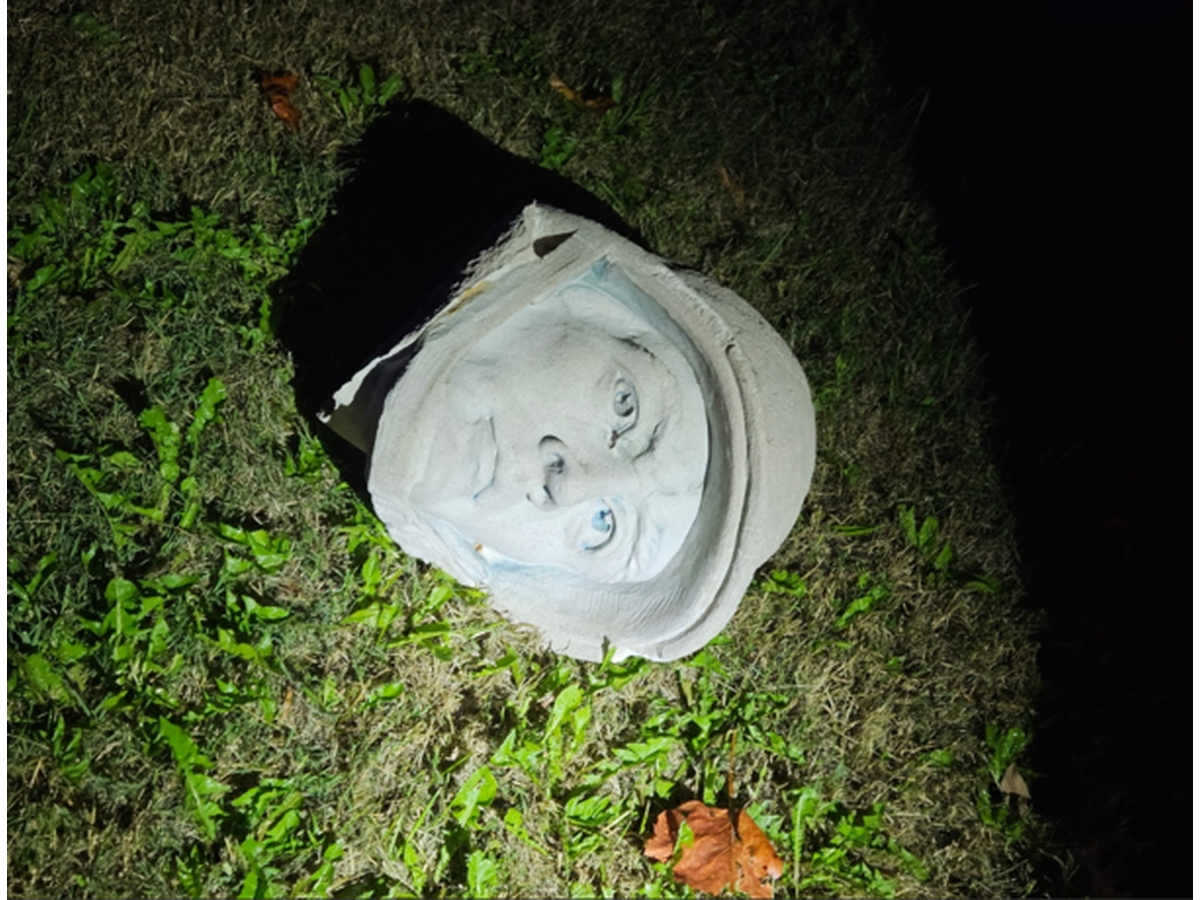
A Stafford County man is facing felony charges following an incident in which he allegedly decapitated the historic Iwo Jima monument located near the entrance of Marine Corps Base Quantico, authorities confirmed.
According to regional law enforcement reporting from Patch Manassas, the suspect was taken into custody after the prominent sculpture sustained severe physical damage. The statue, an iconic landmark positioned at the gateway to the military installation in Prince William County, serves as a high-visibility tribute to United States Marines and is situated adjacent to major traffic corridors servicing the base.
Base security personnel and local civilian law enforcement responded to the scene after discovery of the damage. Investigators determined that significant force was used to sever the head of one of the figures depicted in the bronze monument. The individual was subsequently identified, apprehended, and formally charged with felony destruction of property.
The incident remains under review by federal and military authorities in coordination with local police to determine the exact sequence of events leading up to the breach and the total financial cost required to restore the historic landmark. Officials have not released a motive regarding the act.
Executive Note — EGS Analysis
The Executive Takeaway: High-profile perimeter assets and public-facing monuments present unique vulnerabilities because they are often designed for open visual access rather than physical standoff distance. When an installation balances welcoming civilian visibility with facility hardening, perimeter assets outside access-control checkpoints frequently become prime targets for opportunistic vandalism or targeted disruption. Establishing resilient physical standoffs requires a carefully calibrated tactical architecture that couples passive barriers with active sensor zones. For regional facilities and enterprise campuses, managing the exposure of perimeter assets is an essential component of proactive risk mitigation that prevents symbolic property destruction from escalating into broader operational vulnerabilities.
Educational Sidebar: Perimeter Buffer Zone Hardening and Public Asset Protection
Securing open-access architectural features, statues, and exterior signage outside formal access gates requires a distinct approach from standard entry control. Effective protection frameworks include:
- Layered Detection and Early Standoff: Exterior assets should incorporate early-warning surveillance—such as thermal motion sensors, line-crossing analytics, and focused illumination—to detect human presence well before contact is made.
- Physical Deterrence via Environmental Design (CPTED): Utilizing elevated plinths, non-scalable landscape barriers, and decorative bollards increases the physical difficulty of reaching vulnerable architectural points without creating an overtly militarized aesthetic.
- Rapid Verification and Dispatch Protocols: When monitored cameras detect abnormal loitering or perimeter boundary breaches near critical assets, predefined dispatch thresholds ensure on-site personnel intervene before structural damage occurs.
- Restoration and Chain of Custody Readiness: Documenting high-resolution baseline images and archival specifications aids in prosecution, insurance claims, and historical preservation if an incident occurs.
EGS Security Solutions publishes a complimentary threat & vulnerability assessment framework for facility directors in the DMV. Request it here: https://egssecuritysolutions.com/locations/manassas