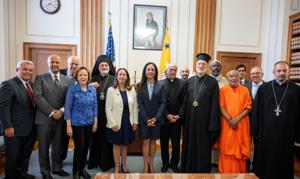
Religious leaders from diverse traditions convened in Washington D.C. alongside representatives from the U.S. Department of Justice (DOJ) to address rising concerns about hate-motivated incidents and to advocate for stronger security measures for houses of worship. The gathering, co-hosted by the Appeal of Conscience Foundation and the DOJ, focused on protecting religious freedom and enhancing the safety of faith communities nationwide.
The summit brought together a broad spectrum of religious figures and government officials to discuss strategies for confronting hatred and bolstering the resilience of places of worship against potential threats. Discussions highlighted the importance of interfaith cooperation and collaborative efforts with law enforcement agencies to safeguard religious institutions. According to reports, participants explored various approaches to address vulnerabilities and ensure the continued ability of communities to practice their faith securely.
The meeting underscored a shared commitment between religious organizations and government bodies to create a more secure environment for worshippers. While specific policy outcomes were not immediately detailed, the event signals ongoing efforts to develop and implement protective measures tailored to the unique needs of religious sites across the country.
Executive Note — EGS Analysis
The convening of faith leaders and the Department of Justice to discuss house of worship security is a significant development for community-based critical infrastructure. Religious institutions, by their nature, are often open and welcoming spaces, yet this accessibility can create structural vulnerabilities. The focus on proactive risk mitigation is essential, moving beyond reactive responses to comprehensive planning. Identifying and addressing these specific vulnerabilities, through methods like threat assessments and security audits, is paramount. This collaborative effort signals a recognition that securing these community hubs requires a nuanced understanding of their operational continuity alongside their inherent openness.
Educational Sidebar: Key Elements of Critical Infrastructure Protection for Religious Sites
Protecting houses of worship, often considered critical infrastructure for their community role, involves a multi-faceted approach. Beyond traditional locked doors, effective security integrates physical and operational strategies. This includes establishing a clear security plan, conducting regular vulnerability assessments, and implementing access control measures appropriate for the specific site. Training staff and volunteers in situational awareness and emergency response is also vital. Furthermore, fostering strong communication channels with local law enforcement and intelligence agencies can provide timely information about potential threats. Developing secure entry/exit protocols, integrating surveillance technologies where appropriate, and planning for crisis management are all components of a robust critical infrastructure protection strategy for religious sites in communities like Manassas, ensuring both safety and the preservation of a welcoming atmosphere.
EGS Security Solutions publishes a complimentary threat & vulnerability assessment framework for facility directors in the DMV. Request it here: https://egssecuritysolutions.com/locations/manassas