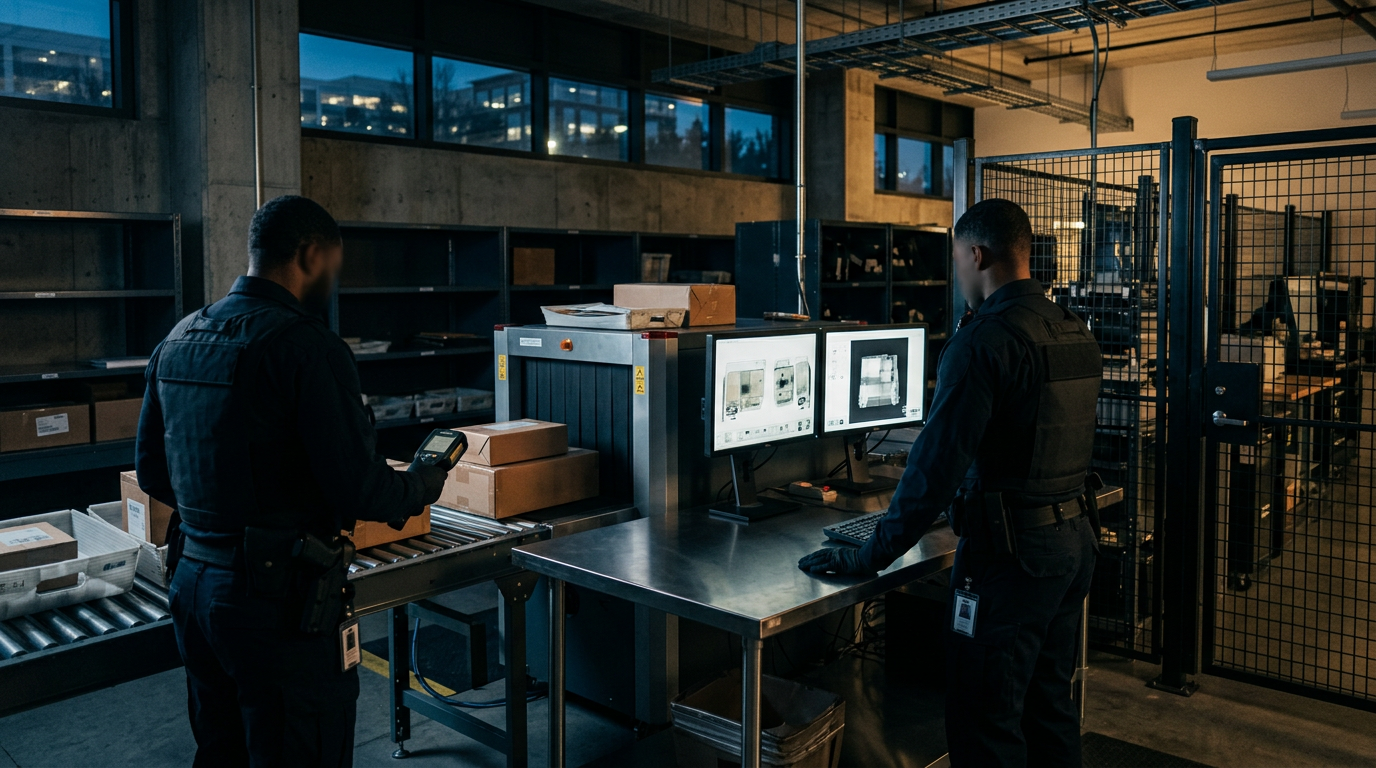
Modern commercial and residential facilities in Prince William County operate as high-volume logistics hubs. The daily influx of packages, from routine office supplies to high-value personal deliveries in an HOA, has transformed the corporate mailroom from a simple administrative function into a critical, yet often overlooked, security checkpoint.
Without a structured protocol for intake and screening, this essential service can become a significant point of vulnerability, exposing an organization to risks ranging from theft and corporate espionage to genuine physical threats.
The Spectrum of Mail-Based Threats
The perception of mailroom risk often defaults to worst-case, high-impact scenarios involving hazardous materials. While these are valid concerns for certain high-profile organizations, a practical risk assessment reveals a much broader spectrum of more common threats relevant to any commercial or residential entity:
- Theft and Loss: The most frequent mailroom issue. Unsecured package rooms and disorganized processes create opportunities for both external and internal theft of high-value goods, leading to financial loss and diminished confidence from residents or employees.
- Contraband: Mail systems can be used to introduce prohibited items into a facility, including weapons or narcotics, bypassing primary entrance screening.
- Information and Intellectual Property Theft: Inbound or outbound mail can be intercepted. Sensitive documents, contracts, or devices containing proprietary data can be targeted, compromising corporate strategy and data security.
- Workplace Violence Precursors: A package can be used to harass, intimidate, or deliver a harmful device to a specific employee, turning the mailroom into an unwitting vector for a targeted attack.
- Chemical and Biological Agents: Though rare, the risk of powders, liquids, or other agents being delivered through the mail is real. A defensible protocol ensures personnel can recognize indicators and respond safely, minimizing exposure and operational disruption.
Principles of a Defensible Screening Protocol
Developing a mail screening program is not about creating a fortress; it is about establishing a reasonable, repeatable, and legally defensible process. This standard of “reasonableness” is a key factor in mitigating premises liability claims following an incident. A comprehensive protocol is built on several key pillars.
First is Centralized Intake and Layout. Whenever possible, all mail and packages should enter through a single, controlled point. This prevents uncontrolled deliveries directly to desks or residential floors. The mailroom itself should be designed to separate screened and unscreened items, with adequate ventilation and non-porous surfaces for easy cleaning.
Second is Personnel Proficiency. The individuals managing the mailroom are the most critical asset. They must be proficient in identifying the common indicators of a suspicious package as defined by agencies like the Department of Homeland Security. This is a specialized skill that goes beyond standard administrative duties and is essential for effective risk identification.
Finally, the protocol must be Integrated with the facility’s overall security program. This means coordinating with access control systems that govern entry to the mailroom, ensuring adequate camera coverage of intake and sorting areas, and having a clear, rehearsed incident response plan for when a suspicious item is identified. A mailroom cannot operate in a security silo.
Executive Note — EGS Analysis The corporate mailroom is a critical node in your facility's operational ecosystem, not an administrative afterthought. Treating it as such without a formal screening protocol significantly expands the organizational liability footprint. Integrating a defined, repeatable mail handling procedure is a foundational component of a sound tactical architecture, ensuring a seemingly minor function does not become a major point of failure.
Educational Sidebar: Mail Screening Suspicious Indicator Checklist
This checklist, based on public CISA and FBI guidelines, can be used as a training and awareness tool for personnel responsible for handling mail and packages. An item may be considered suspicious if it exhibits several of the following characteristics:
- No return address or a nonsensical one.
- Excessive postage, often far more than needed.
- Addressed to a title only (e.g., “President,” “Facility Director”) or an incorrect title.
- Misspelled common words, city, or state names.
- Oily stains, discolorations, or strange odors.
- Excessive use of tape, string, or other wrappings, suggesting it has been sealed to contain something.
- Rigid, lopsided, or unevenly weighted packaging.
- Protruding wires or aluminum foil.
- Written instructions such as “Personal,” “Confidential,” or “Do Not X-Ray.”
- Unexpected delivery from an unknown person or location.
A prudent response plan dictates that personnel should not open a suspicious item. Instead, they should isolate the item, secure the immediate area, and notify their designated security or management contact to initiate the formal response protocol.
EGS Security Solutions publishes a complimentary threat & vulnerability assessment framework for facility directors in the DMV. Request it here: https://egssecuritysolutions.com/locations/manassas.