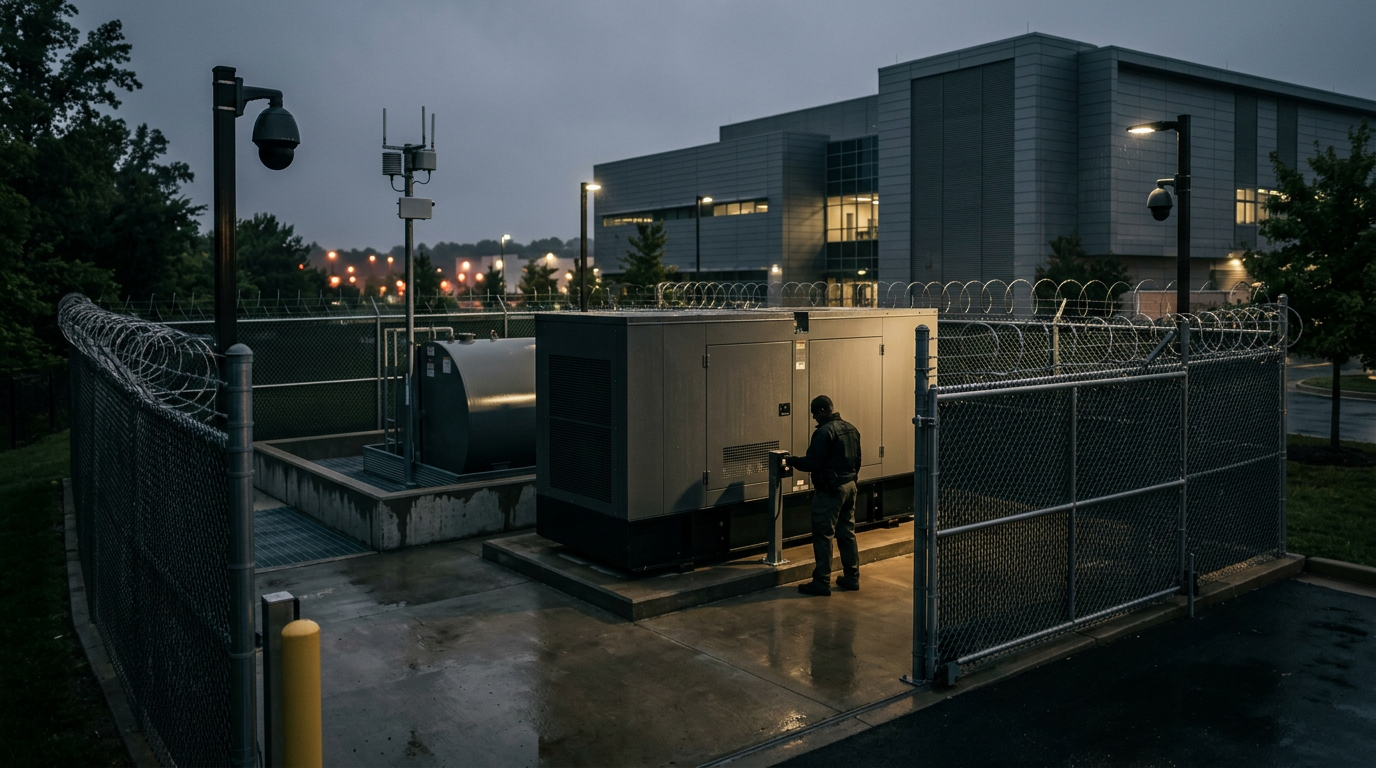
Commercial Emergency Generator and Fuel Storage Security: Physical Hardening, Telemetry Integration, and Environmental Containment Protocols
Stationary emergency power systems represent critical infrastructure for commercial office parks, logistics centers, and healthcare campuses throughout Prince William County. While building codes primarily govern electrical capacity, ventilation, and fire separation, the physical security of generator sets and bulk diesel storage assemblies often falls into an operational gray area between facilities maintenance and corporate asset protection.
An unsecured auxiliary power system introduces severe operational and financial exposures. Unauthorized access can result in mechanical sabotage, fuel contamination, catastrophic accidental discharge, or the sudden failure of life-safety branch circuits during a primary grid disruption. Establishing a defensible protection posture requires balancing regulatory accessibility for emergency personnel with robust physical deterrents and automated tampering detection.
Perimeter Hardening and Enclosure Engineering
External generator enclosures and standalone belly tanks require specialized physical zoning. NFPA 110 (Standard for Emergency and Standby Power Systems) mandates adequate clearances for airflow, maintenance, and fire suppression, which must be reconciled with physical intrusion countermeasures.
Perimeter enclosures should incorporate anti-scale, heavy-gauge expanded metal or welded wire mesh rather than standard chain-link fencing, which is easily breached with hand tools. Enclosure gates must feature high-security shrouded hasps and pick-resistant padlocks rated to ASTM F883 standards, preventing bolt-cutter compromise.
For sound-attenuated outdoor enclosures, external access latches on service panels must be keyed alike to a controlled facility keyway rather than the factory-default master keys frequently left in place post-commissioning. Louvers and air intake baffles require internal anti-intrusion grates to prevent foreign objects or incendiary devices from being introduced into engine compartments.
Fuel Delivery Protection and Tamper Verification
Bulk fuel storage presents both an operational dependency and an environmental liability. Ground-level fill ports, remote fuel drops, and interstitial leak-detection ports on double-walled tanks must be mechanically secured to prevent theft, unauthorized tapping, and deliberate fluid contamination.
- Lockable Cam-and-Groove Caps: Standard dust caps on fuel fill pipes should be upgraded to lockable, pressure-relieving safety caps connected to the facility master key system.
- Spill Bucket Isolation: Remote fill boxes must remain secured when deliveries are not actively occurring, limiting access to emergency shut-off valves and overfill alarm acknowledgments.
- Sensor Integration: Fuel cap monitoring switches tied to the building supervisory control and data acquisition (SCADA) or central intrusion detection system ensure that any opening of a fuel port outside of scheduled delivery windows generates an immediate security alert.
- Telemetry Auditing: Real-time tank level telemetry should be reconciled against engine runtime logs. Sudden drops in hydrostatic head without corresponding kilowatt-hour generation indicate either an uncontained leak or illicit fuel extraction.
Emergency Power Off (EPO) Switch Safeguards
National Electrical Code guidelines frequently require external, readily accessible Emergency Power Off (EPO) or remote shutdown buttons for first responders. Because an exposed EPO switch can be triggered accidentally or maliciously to force a facility black start, protecting these controls without impeding firefighter access is essential.
External switches must be housed in weather-tight, tamper-monitored enclosures. Transparent, hinged polycarbonate covers equipped with integrated piezo sounders and supervisory dry-contact relays alert facility staff the moment a cover is lifted. Fixed surveillance coverage must maintain unobstructed sightlines on the EPO station to ensure positive visual verification of any manipulation.
Executive Note — EGS Analysis Commercial auxiliary power assets cannot be treated as passive utility enclosures; they represent the anchor of a facility's operational continuity. When organizations fail to address the structural vulnerabilities surrounding bulk fuel and generator controls, they expose themselves to substantial downtime and expanded regulatory exposure. Implementing rigorous mechanical isolation and active telemetry is baseline proactive risk mitigation for any enterprise asset manager.
Educational Sidebar: Critical Infrastructure Verification Framework for On-Site Power
Facility directors and property managers can evaluate their emergency power defenses using this quarterly verification sequence:
- Keyway Standardization: Verify that all enclosure doors, service panels, and remote fill boxes have been re-keyed away from factory-issued manufacturer cuts.
- Supervisory Switch Testing: Manually open fuel access covers and EPO switch shields to confirm immediate notification signals at the central monitoring console.
- CCTV Field-of-View Audit: Confirm that camera positions cover generator perimeter gates, fuel replenishment areas, and emergency transfer switches without blind spots caused by seasonal foliage or exterior equipment staging.
- Containment Integrity Check: Inspect double-wall interstitial space sensors and spill containment basins for physical bypasses, wedged valves, or drainage overrides.
- Contractor Chain of Custody: Enforce dual-custody verification protocols for all third-party diesel fuel deliveries, ensuring delivery manifests match measured tank telemetry adjustments.
EGS Security Solutions publishes a complimentary threat & vulnerability assessment framework for facility directors in the DMV. Request it here: https://egssecuritysolutions.com/locations/manassas