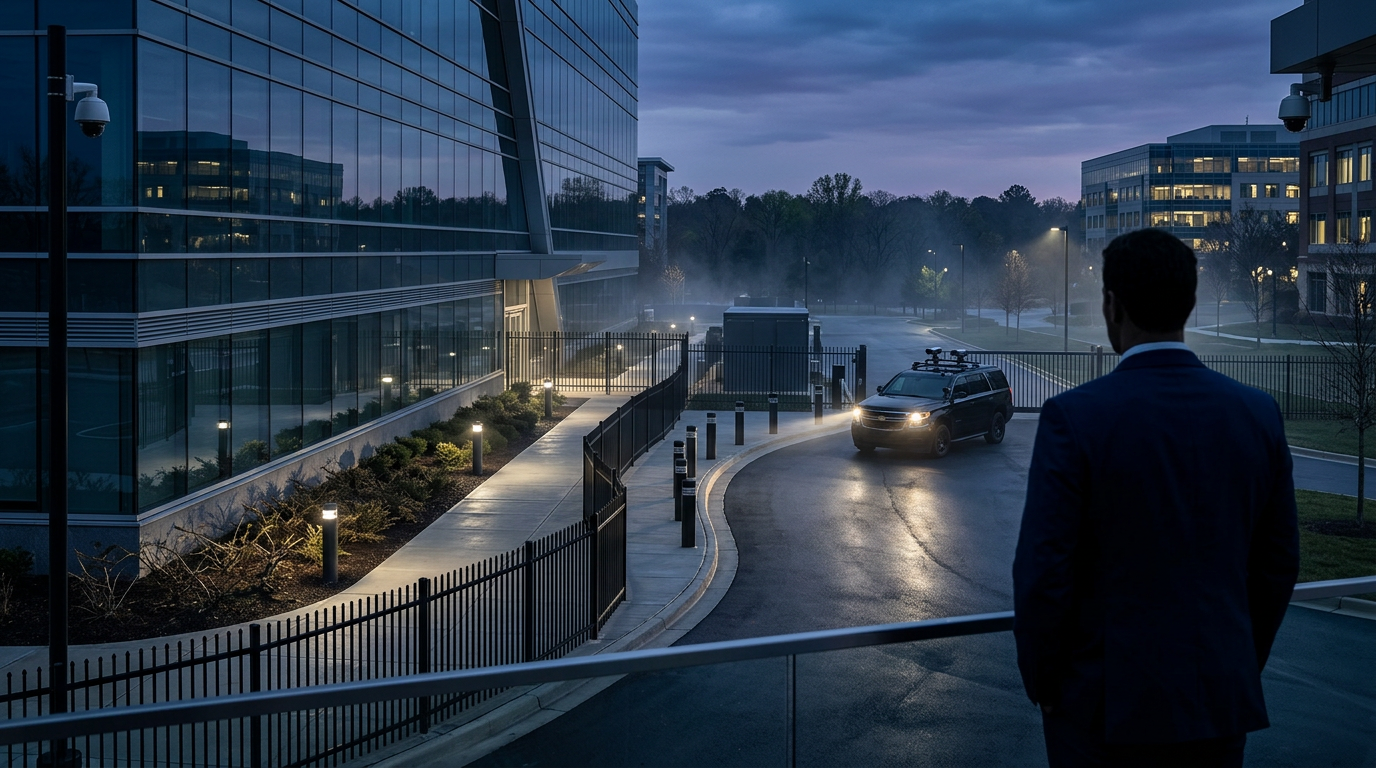
Crime Prevention Through Environmental Design, or CPTED (pronounced sep-ted), is a multi-disciplinary approach to deterring criminal behavior by influencing offender decisions through the thoughtful design and management of physical environments. For facility directors, HOA boards, and corporate asset managers in Prince William County, understanding CPTED is not about building fortresses, but about strategically shaping a property to be less attractive to potential offenders.
The core premise is that the physical characteristics of a space can either encourage or discourage illicit activity. By integrating CPTED principles, property managers can reduce the incidence and fear of crime, improve quality of life, and decrease long-term security-related operational costs. The framework is built on four primary, overlapping concepts.
1. Natural Surveillance
Natural surveillance aims to increase the perceived risk to offenders by maximizing the visibility of a space. The goal is to make potential criminals feel as though they are being watched, even passively. This is achieved not just with cameras, but through architectural design and landscaping.
Effective strategies include placing windows to overlook parking lots and walkways, using glass doors at building entrances, and specifying outdoor lighting that eliminates deep shadows and provides good color rendering. Landscaping plays a critical role; trees should be pruned up to six feet from the ground, and shrubs should be kept below three feet to maintain clear sightlines.
2. Natural Access Control
This principle guides people to and from a space while limiting access to areas where they do not belong. It creates a perception of risk for would-be offenders by making it difficult to move through a property without being noticed. This is accomplished physically, not necessarily with locks or alarms.
Examples include using a single, clearly defined public entrance that is easily observable. Walkways, low fences, and strategic landscaping can be used to channel foot traffic along desired paths. This subtly discourages shortcuts through secluded or unmonitored areas, effectively denying criminals easy or unobserved entry and exit routes.
3. Territorial Reinforcement
Territorial reinforcement uses physical design to create a clear distinction between public, semi-public, and private spaces. The goal is to foster a sense of ownership among legitimate users of the space—be they employees, residents, or customers—which encourages them to challenge intruders or report suspicious activity.
This can be as simple as well-maintained landscaping, clear signage indicating property boundaries, and decorative fencing. In an HOA context, it might involve creating community gardens or playgrounds that promote a positive resident presence. For a commercial property, it means ensuring the building exterior, signage, and parking areas are clean and in good repair, signaling that the property is actively managed and cared for.
4. Maintenance and Management
Often considered the fourth pillar of CPTED, maintenance is what sustains the first three principles. A broken light fixture negates natural surveillance. An overgrown hedge defeats clear sightlines. A fence in disrepair fails at both access control and territorial reinforcement. The "broken windows theory" is relevant here: visible signs of disorder and neglect can attract further crime and decay.
A consistent maintenance plan is therefore a critical component of any CPTED strategy. Promptly repairing damage, replacing burned-out lights, removing graffiti, and ensuring landscaping is properly maintained are essential operational tasks that directly support the property's security posture.
Executive Note — EGS Analysis Implementing CPTED is a powerful form of proactive risk mitigation. By methodically addressing the structural vulnerabilities inherent in a property's layout and design, organizations can significantly reduce their long-term liability footprint. This approach shifts the focus from merely reacting to incidents to fundamentally altering the environmental factors that allow them to occur in the first place.
Educational Sidebar: A Basic CPTED Self-Audit Framework
Use this checklist to perform a high-level review of your property through a CPTED lens. Answering "no" to any question may indicate an area for improvement.
-
Natural Surveillance
- Are primary entrances and ground-floor windows clearly visible from the street or other public areas?
- Is landscaping trimmed to maintain clear sightlines (shrubs under 3 feet, tree canopies over 6 feet)?
- Does nighttime lighting adequately illuminate parking lots, walkways, and building entrances without creating harsh glare or deep shadows?
-
Natural Access Control
- Is there a single, clearly identifiable main entrance for visitors?
- Do sidewalks and landscaping naturally guide visitors along intended paths?
- Are private or restricted areas clearly delineated from public spaces through signage, fencing, or design?
-
Territorial Reinforcement
- Is the property line clearly defined?
- Is the property well-maintained, clean, and free of graffiti or litter?
- Does signage (e.g., address, building name) look professional and well-cared-for, signaling active ownership?
-
Maintenance
- Is there a documented process for reporting and repairing broken lights, locks, or windows?
- Is landscaping maintenance performed on a regular, predictable schedule?
- Is trash and debris removed promptly?
EGS Security Solutions publishes a complimentary threat & vulnerability assessment framework for facility directors in the DMV. Request it here: https://egssecuritysolutions.com/locations/manassas.